
How To Apply for an Italy Elective Residency Visa Easily
A quieter path to living in Italy without chasing a job
The usual advice about moving abroad often starts with jobs, work permits, and long-term contracts, but there is another route that feels almost hidden in plain sight. It’s built for people who don’t want to compete in a new job market yet still dream of waking up in Italy each day. This guide exists to unpack that quieter option in a way that feels simple, clear, and actually useful. Instead of drowning in legal terms or scattered advice, the focus here is on what truly matters, what steps make a difference, and how to approach the process without second-guessing every move.
Many people begin their search with scattered forums and outdated tips, only to feel more confused than before. That’s where clarity becomes powerful. Through options such as Italy’s elective residency visa pathways, it is possible to build a life in Italy based on financial stability rather than employment. This guide breaks that idea down into simple parts, showing what needs to be prepared, how decisions are made, and why certain steps matter more than others. By the end, there will be a clear sense of direction, fewer doubts, and a realistic view of what it takes to turn the idea of living in Italy into something that actually works.
What is an Italy elective residency visa, and who needs it
The Italian elective residency visa is meant for people who want to live in Italy without working there. You must show a stable income from outside Italy. That’s the key rule. If your income depends on a job in Italy, this visa is not for you. Retirees, remote earners, and investors often apply for it.
You might be wondering, how much income is enough. There is no fixed number, but it must be steady and proven. Savings alone are not enough. Officials want to see regular income. That could be from pensions, rentals, or investments. They check consistency, not just amount.
Here are the main points you need to know:
- You cannot work in Italy with this visa
- You must prove steady passive income
- You need a place to stay in Italy
- Health insurance is required
The idea is simple. Italy wants residents who can support themselves. If you meet that, you are already halfway there.
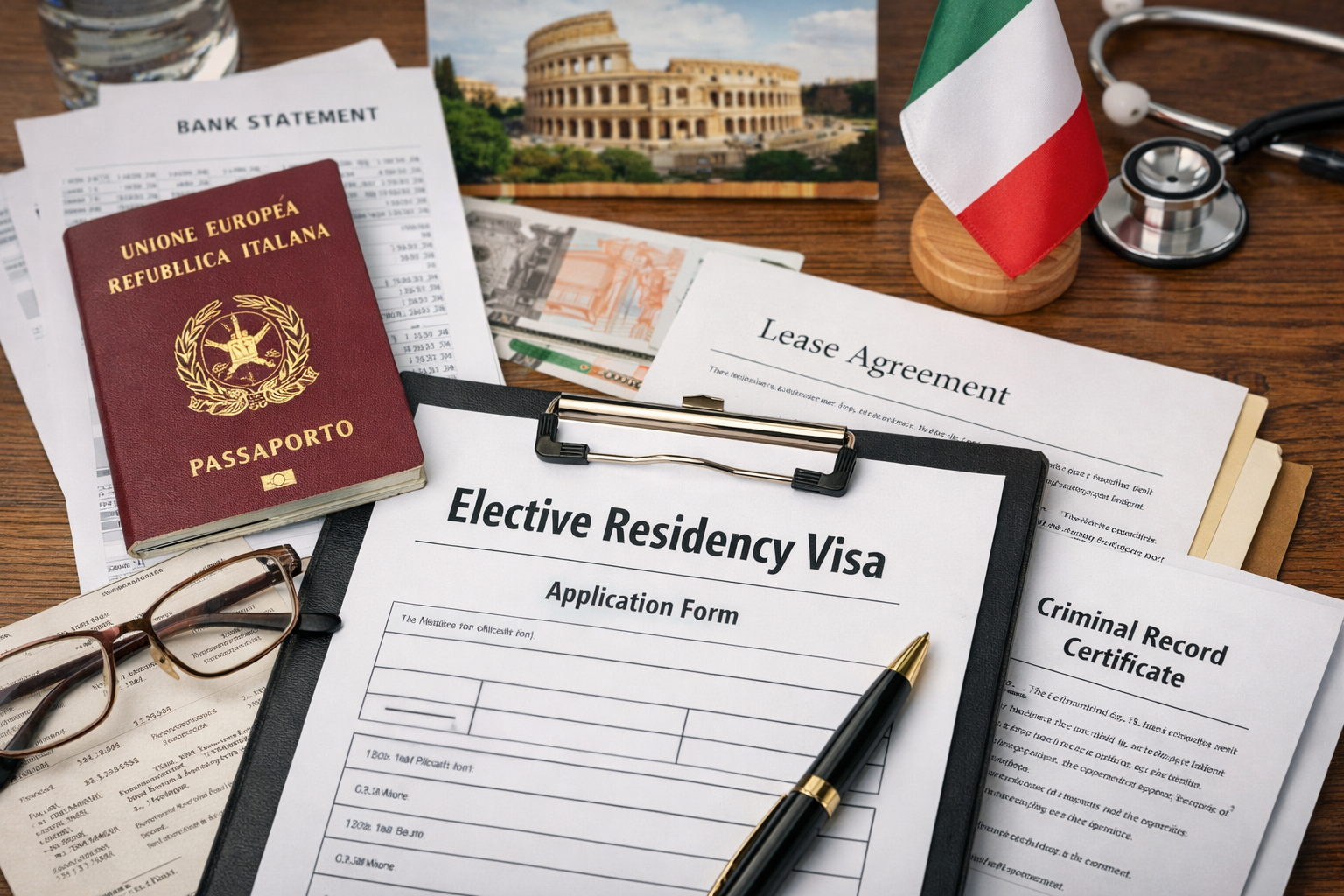
How to prepare documents for a smooth visa approval process
This is where most people mess up. Not because it’s hard, but because it’s detailed. Missing even one paper can delay your application. So, it helps to stay organized from the start.
You need to gather proof of income first. This is the most important part. Bank statements, pension letters, or investment reports all help. Make sure they are clear and recent. Old documents can cause issues.
Next comes your housing proof. You need a rental agreement or property document in Italy. Temporary bookings don’t always work. It must look stable.
Also, prepare these:
- Valid passport with enough validity
- Health insurance that covers Italy
- Clean criminal record certificate
- Completed visa application form
One small tip. Keep copies of everything. It sounds basic, but it saves time later. If something gets lost or questioned, you are ready.
Why is financial proof the most important part here
Let’s be honest. This visa is mostly about money, not in a flashy way, but in a stability sense. Italy wants to know you won’t depend on its system. So, your income must speak clearly.
It’s not about showing a big number once. It’s about showing a steady flow. Think of it like a monthly pattern. If your income fluctuates, it can raise doubts. Consistency builds trust.
Here is what works best:
- Regular monthly income from verified sources
- Clear bank statements with matching records
- Legal proof of income origin
1. Show consistency clearly
Income should look stable over time. Avoid sudden, unexplained spikes.
2. Keep documents simple
Do not overcomplicate. Clear and direct proof works better.
3. Avoid cash-only records
Officials prefer traceable income. Bank records matter more.
Many applicants fail here because they overthink it or underprepare. Keep it clean, simple, and honest.
How to avoid common mistakes during the application process
Most rejections are not random. They happen due to small errors. The good part is, you can avoid them if you know what to watch.
One common mistake is unclear income proof. People submit documents that are too complex or poorly translated. That slows things down. Keep everything easy to read.
Another issue is incomplete forms. It sounds minor, but missing details can delay your file. Always double-check before submission.
Watch out for these mistakes:
- Submitting outdated documents
- Ignoring translation requirements
- Not providing accommodation properly
- Weak or unclear financial records
Also, timing matters. Applying too late or rushing can hurt your chances. Give yourself enough time to prepare everything well.
What happens after approval, and how to settle in Italy
Getting approval feels great. But the journey does not stop there. Once you arrive in Italy, you need to apply for a residence permit. This must be done within a few days.
You also need to register your address. This helps you access services later. Without it, things can get tricky.
Here’s what you should do next:
- Apply for a residence permit quickly
- Register your local address
- Set up a bank account
- Get familiar with local rules
Life in Italy is slower compared to many places. That’s part of the charm. But it also means systems can take time. Patience helps here.
Take small steps. Learn the basics. Over time, things settle naturally.
Taking your next step toward life in Italy
Moving to Italy is not just paperwork. It’s a lifestyle shift. This guide showed you what matters most—clear income, proper documents, and careful preparation. If you follow these steps, the process becomes much smoother.
We believe that big changes should feel exciting, not stressful. With the right approach, you can make this transition with confidence. Start preparing early, stay organized, and keep things simple. That’s the real secret.
If you are ready to take the next step, now is the time to act. Gather your documents, plan your move, and move forward with clarity. A new chapter in Italy is closer than you think.